What is Social Media Marketing (SMM)?
Definition and Overview
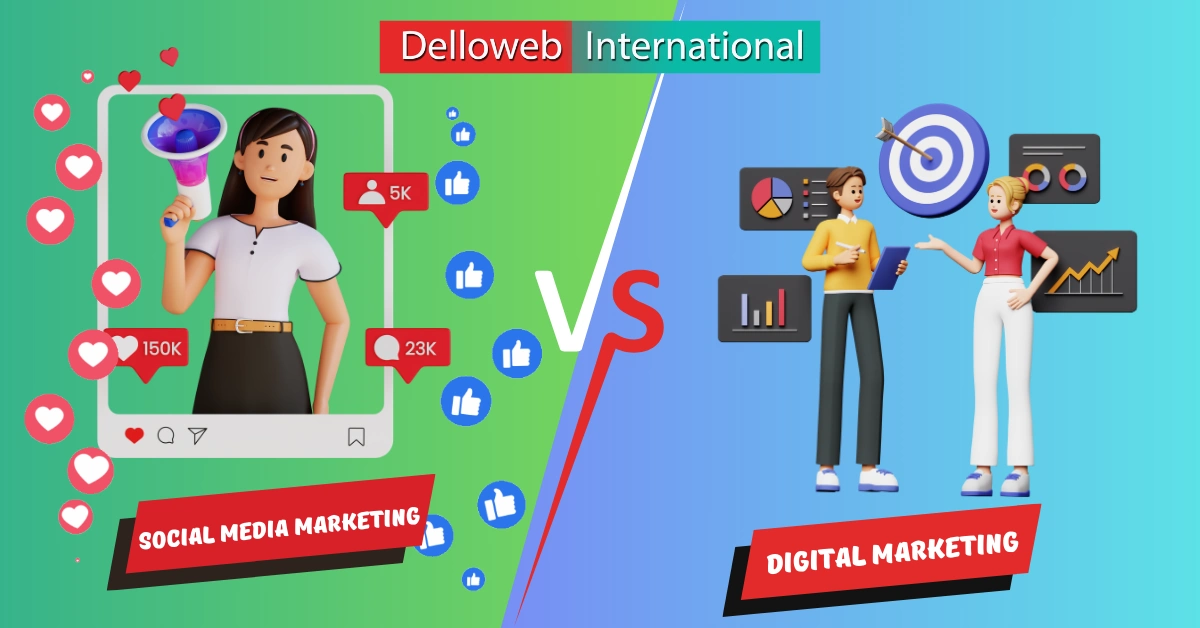
Social Media Marketing is a method of using social media platforms to sell products, services or brands. This means making suitable content for platforms such as Facebook, Instagram, Twitter and LinkedIn to bring the message home in contextually relevant ways.
What is Digital Marketing (DM)?
Definition and Overview
Digital Marketing is a broader term encompassing all advertising efforts that use a digital tool or the internet. It consists of quite a few online channels, including SEO (Search Engine Optimization), PPC (Pay-Per-Click) advertising, e-mail marketing, and content material advertising and marketing.
Key Differences Between Social Media Marketing and Digital Marketing
| Category | Social Media Marketing (SMM) | Digital Marketing (DM) |
| Definition | Use of social media platforms to promote products/services. | Encompasses all online marketing efforts including SMM. |
| Channels | Facebook, Instagram, Twitter, LinkedIn, Pinterest, etc. | Search engines, websites, social media, email, mobile apps. |
| Scope | Limited to social media platforms. | Broader, includes SEO, SEM, PPC, content marketing, email marketing. |
| Content Format | Mainly visual (images, videos, infographics, memes). | Varies: text, images, videos, ads, emails, articles, blogs. |
| Audience Engagement | Direct interaction through likes, comments, shares. | Indirect engagement through clicks, subscriptions, inquiries. |
| Focus | Building community and brand awareness. | Driving traffic, generating leads, and sales conversions. |
| Cost | Can be low-cost with organic posts, or paid ads. | Can involve costs across multiple platforms (ads, email campaigns, SEO). |
| Analytics Tools | Platform-specific insights (Facebook Insights, Twitter Analytics). | Google Analytics, SEMrush, Moz, email tracking tools. |
| Timeframe for Results | Short-term; faster results with viral content. | Medium to long-term; SEO, PPC take time to show results. |
| Targeting Options | Target based on demographics, interests, behaviors. | Advanced targeting with SEO, PPC, and retargeting techniques. |
| Example of Tactics | Influencer marketing, contests, hashtag campaigns. | SEO, Google Ads, content marketing, email automation. |
| SEO Integration | Minimal direct impact on SEO but increases traffic. | Essential part of SEO strategy; improves website ranking. |
| Importance of Engagement | High, social proof matters (likes, shares). | Moderate; conversions and lead generation matter more. |
| Ad Formats | Carousel ads, stories, video ads, sponsored posts. | Search ads, display ads, email marketing, video ads. |
Importance Together:
Both Social Media Marketing and Digital Marketing are essential parts of an integrated marketing strategy. They complement each other, as SMM helps build a brand’s online presence and community, while DM drives conversions through various channels. Together, they ensure a brand’s growth, visibility, and customer engagement.
Conclusion
Both Social Media Marketing and Digital Marketing have their precise strengths. Social Media Marketing is amazing for quick-term engagement and building network, whilst Digital Marketing offers more complete, long-term advantages. By information the differences and blessings of each, organizations can create a marketing strategy that leverages the fine of both worlds.